What to Eat in Da Nang: 10 Local Dishes and Where to Find Them

Da Nang often gets treated as a beach stop between Hoi An and Hue, but its food deserves a day of its own. If you are wondering what to eat in Da Nang, the short answer is: noodles with barely any broth, pork you wrap yourself in rice paper, and seafood that came off a boat that morning. This guide covers 10 local dishes, what each one tastes like, and where locals actually go to eat them.
Da Nang sits in the middle of central Vietnam's food map. It was part of Quang Nam province until 1997, so it shares several dishes with nearby Hoi An, but the city has its own everyday favorites and a fishing-port appetite for anything from the sea.
What to eat in Da Nang: 10 local dishes
1. Mi Quang (Quang noodles)
The region's signature noodle. Wide, chewy rice noodles, usually tinted yellow with turmeric, sit in just a few spoonfuls of rich broth instead of a full soup. Toppings are typically pork and shrimp or chicken, and in Da Nang you may also see a jellyfish version (mi Quang sua). It arrives with a basket of herbs, crushed peanuts and a toasted sesame rice cracker. Snap the cracker over the bowl, add herbs and toss everything together.
2. Bun cha ca (fish cake noodle soup)
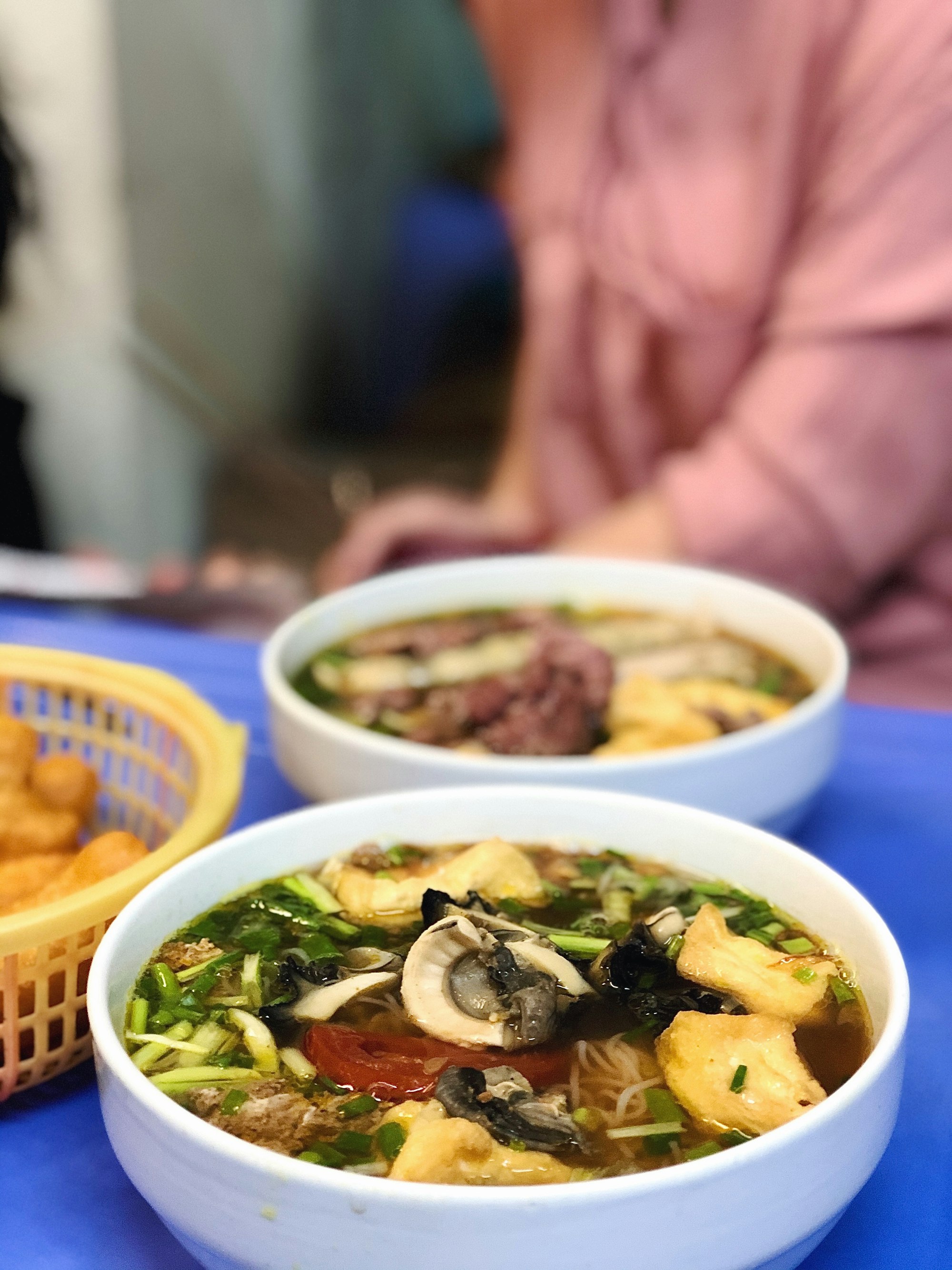
This is what much of Da Nang eats for breakfast: rice vermicelli and fish cakes in a light broth that leans sweet and sour, often cooked with pumpkin, pineapple and tomato. It tastes noticeably different from the Nha Trang version further south. Nguyen Chi Thanh street in Hai Chau district has been known for it for decades.
3. Banh trang cuon thit heo (pork rice paper rolls)
Often called the city's signature dish. Thin slices of boiled pork belly come with rice paper, lettuce, herbs, cucumber and sour green fruit such as green banana or mango. You roll each bite yourself and dip it in mam nem, a fermented anchovy sauce sharpened with pineapple, garlic and chili. If you want a menu and air conditioning for your first try, the long-running Tran restaurants are an easy introduction.
4. Bun mam nem (vermicelli with anchovy sauce)
Same funky sauce, different format. Cold vermicelli is topped with roast and boiled pork, herbs and peanuts, then tossed with mam nem. It is salty, pungent and much loved locally. If the smell gives you pause, give it three bites before you decide.
5. Banh xeo (crispy pancakes)
Central Vietnam makes these sizzling rice-flour pancakes smaller and crispier than the southern version, usually with shrimp and pork inside. You wrap a piece in rice paper with herbs and dip it in a thick peanut-based sauce.
6. Goi ca Nam O (Nam O raw fish salad)
A specialty of Nam O, a fishing village at the northern end of Da Nang's bay. Thin slices of very fresh fish are cured with lime, mixed with herbs and toasted rice powder, and eaten wrapped in leaves and rice paper with a rich dipping sauce. Because the fish is raw, this is the dish to be pickiest about: eat it somewhere busy with a solid reputation.
7. Banh trang cuon ca nuc (mackerel scad rolls)
The seafood cousin of the pork rolls. Steamed scad, a small local fish, is rolled in rice paper with herbs and vegetables. It is lighter than the pork version and often served at the same restaurants, so order both and compare.
8. Banh canh (thick noodle soup)
Slippery, thick noodles made with tapioca and rice flour, served in a hearty broth with fish cake, pork or crab. It is a comforting choice on a rainy day, and you will find it among the food stalls at Con Market.
9. Oc (snails and shellfish)
Snails are an evening social food in Da Nang. Plates of snails and clams cooked with lemongrass, chili, tamarind or coconut milk are shared at low plastic tables over cold drinks. Toothpicks are your cutlery.
10. Fresh seafood by the beach
Seafood restaurants along the beach road near My Khe let you pick live fish, squid, clams and prawns from tanks and choose how each is cooked: grilled, steamed, with garlic or with tamarind. Always confirm the price per kilo and the weight before anything goes to the kitchen.
Where to eat in Da Nang: markets and streets locals use
Con Market (Cho Con): the big, busy traditional market in the city center. Its food area serves mi Quang, banh canh, sweet soups and snacks. More local and less polished than Han Market, which is part of the appeal.
Han Market (Cho Han): on Tran Phu street near the Han River. Food stalls are on the ground floor; it is also the easy place to buy dried seafood and coffee to take home.
Bac My An Market: on the beach side of the river, known for cheap traditional meals. Handy if you are staying near My Khe.
Family-run noodle shops: many serve only one or two dishes. If a place is full of locals at 7am, that is your recommendation.
Markets are liveliest in the morning and many food stalls wind down by early evening, so plan market meals for breakfast or lunch and check current hours on a map app before you go.
Tips for eating well in Da Nang
Eat noodle soups in the morning, when locals do and the broth is freshest.
Use the herbs generously. In central Vietnam they are part of the dish, not decoration.
Ask the price of seafood per kilo and watch it being weighed before ordering.
Be choosy with raw dishes. Our guide to eating street food safely in Vietnam covers how to pick a stall.
Going to Hoi An next? The dishes overlap but are not identical. Our Hoi An local food guide covers cao lau and the other specialties Da Nang does not claim.
Da Nang food FAQ
What is the most famous food in Da Nang?
Mi Quang and banh trang cuon thit heo are the two dishes most often named as the city's signatures, with bun cha ca close behind as the everyday breakfast.
Is Da Nang food different from Hoi An food?
There is plenty of overlap, since both cities were historically part of Quang Nam and mi Quang is eaten in both. Hoi An is best known for cao lau and its chicken rice, while Da Nang leans toward fish cake noodles, pork rice paper rolls and seafood.
Can vegetarians eat well in Da Nang?
It takes a little planning, because many broths and dipping sauces use fish or anchovies. Vegetarian versions of mi Quang exist, mostly at dedicated vegetarian restaurants; look for the word "chay" on signs and menus.
Da Nang rewards travelers who eat like locals: early noodles, long lunches of rice paper rolls, and seafood by the beach in the evening. Give the city at least one full food day before you move on.

Comments