Is Street Food Safe in Vietnam? How to Eat Well Without Getting Sick

Is street food safe in Vietnam? For most travelers the honest answer is yes, as long as you choose where you eat with a little care. Street food is how much of the country eats breakfast, lunch and late-night snacks, and skipping it means missing one of the best parts of a trip. The trick is not avoiding the plastic stools, it is learning to read a stall in a few seconds.
This guide covers what actually tends to make visitors sick, how to pick a good vendor, which dishes are easiest on a new stomach, the truth about ice and tap water, and what to do if your stomach complains anyway.
Is street food safe in Vietnam? The short answer
Vietnamese street food is eaten by millions of people every day, and most visitors who dive in come home with nothing worse than a craving for broth. That said, the risk is not zero. Stomach upsets are common for travelers anywhere in Southeast Asia, and they happen after hotel buffets and smart restaurants too, not only on the pavement.
Most problems come from a few predictable sources: food that has sat around warm for hours, water that was never boiled, and eating too much rich, unfamiliar food in the first couple of days. Deal with those three and you remove most of the risk.
How to spot a good street food stall
It is busy with locals. High turnover means ingredients were bought that morning and do not sit around. A crowd of office workers at lunchtime is the best review you will find.
Food is cooked in front of you. Broth kept at a rolling boil, meat going straight from the grill to your plate, a pancake fried to order. Heat is your friend.
The vendor specialises. A stall that makes one dish all day usually makes it well and goes through its ingredients quickly.
Raw ingredients are covered or chilled. Meat should be in a cooler or under cover, not sitting out in the afternoon sun.
Bowls and chopsticks look clean and dry. Many locals wipe their chopsticks and spoon with a paper napkin before eating. Do the same; nobody will think it rude.
The easiest dishes for a new stomach
If you are nervous, or it is your first few days, start with dishes that are cooked hot and served straight away:
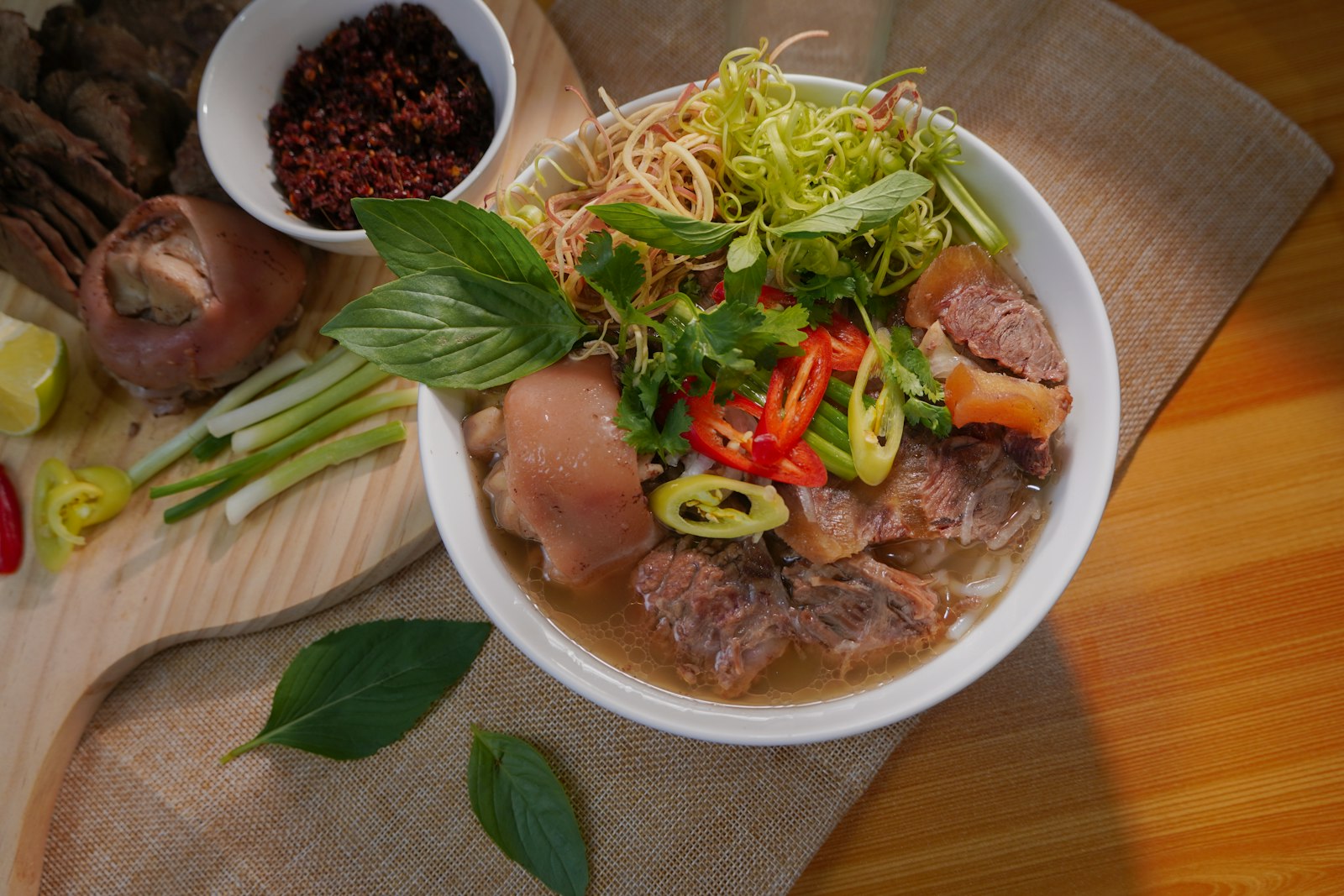
Noodle soups such as pho or bun bo, where boiling broth is poured over the bowl
Grilled meats, like bun cha in Hanoi or broken rice with grilled pork (com tam) in Saigon
Anything fried to order: crispy pancakes (banh xeo), spring rolls, mini rice cakes (banh khot)
Banh mi from a busy cart, where the fillings move fast
For dish ideas city by city, see our guides to what to eat in Hanoi and the best dishes to hunt down in Saigon.
What to be more careful with
Raw herbs and greens. Fresh herbs come with almost everything and are usually rinsed in tap water. Most travelers eat them without trouble, but if your stomach is sensitive, go lighter on them for the first few days.
Shellfish and seafood at quiet stalls. A busy seafood place that cooks to order is a much better bet than a half-empty one late at night.
Pre-cut fruit and blended smoothies. The fruit may have been cut or rinsed with tap water. Whole fruit you peel yourself, such as mangoes, bananas or rambutans, is the safer choice.
Food that has been sitting out. Rice, meat and egg dishes left at room temperature through a hot afternoon are where trouble starts.
Open sauces left on the table all day. Freshly made dipping sauce is fine; a jar that has been open in the heat since breakfast is less appealing.
Water, ice and drinks
Tap water is not considered safe to drink anywhere in Vietnam, so stick to sealed bottled water or filtered water your hotel provides. Cooking is a different story: broths, rice and boiled vegetables are made with water that has been brought to the boil, so a steaming bowl of soup is not a concern.
Ice worries a lot of visitors. In cafes and most restaurants it is factory-made from purified water and delivered every day; the usual kind is clear, shaped like a short tube with a hole through the middle. Ice chipped off a big block at a very basic roadside stall is more of a gamble, so if you are unsure, ask for your drink without ice (khong da).
Hot tea and coffee, canned soft drinks, beer and coconut water drunk straight from the shell are all easy choices.
Simple habits that prevent most problems
Ease in. Do not eat at ten stalls on your first afternoon. Give your stomach a day or two to adjust to new spices, fat and herbs.
Carry hand sanitiser or wet wipes. Many stalls have no sink, and you will be eating with your hands more than you expect.
Eat at peak times. Breakfast for noodle soup, lunch for rice dishes, evening for grills. That is when food is freshest.
Go easy on chili and fat at first. Very rich or spicy food can upset a stomach on its own, with no germs involved.
Pack basic supplies and get advice before you fly. Oral rehydration salts are worth having, and a travel clinic can tell you which vaccinations, such as hepatitis A, they recommend for Vietnam.
What to do if you get sick
Most mild stomach upsets pass within a day or two. Rest, sip plenty of bottled water with rehydration salts (pharmacies, called nha thuoc, are easy to find in any town), and eat plain food such as rice porridge (chao), which is conveniently sold on the street as well.
See a doctor if you have a high fever, blood in your stool, signs of dehydration such as dizziness or very little urine, or symptoms that do not improve after a couple of days. The big cities have international clinics that are used to treating travelers, and your hotel can point you to the nearest one.
Street food safety FAQ
Is street food riskier than eating in restaurants?
Not necessarily. A busy stall cooking to order can be fresher than a quiet restaurant whose buffet has been sitting out since morning. Judge the individual place, not whether it has walls.
Should I avoid the fresh herbs?
Most visitors eat them happily, and they are a big part of what makes Vietnamese food taste the way it does. If you have a sensitive stomach, lean on cooked dishes for the first few days and add raw greens gradually.
Is street food OK for children?
Yes, with the same rules. Choose hot, freshly cooked and mild dishes such as noodle soup, grilled pork with rice, or a banh mi without chili, and keep wet wipes in your bag.
Street food is one of the great reasons to come to Vietnam. A busy stall, food cooked in front of you, sealed water and a gentle first couple of days are usually all it takes to enjoy it with confidence. Pull up a stool and order what the table next to you is having.

Comments