Hue in Two Days: A Relaxed Itinerary for First-Time Visitors

Hue was Vietnam's imperial capital under the Nguyen dynasty from 1802 to 1945, and the city still wears that history lightly: a walled citadel on the north bank of the Perfume River, royal tombs scattered through the green hills to the south, and some of the best food in the country. It's quieter than Hoi An and easy to underrate. Two full days is enough to see the highlights without rushing, and this plan shows how to split them.
Getting to Hue
Hue sits roughly halfway down the country. Phu Bai Airport is about 15 km south of the centre, with flights from Hanoi and Ho Chi Minh City. The north-south railway also stops in the city, and the stretch of line south towards Da Nang is one of the most scenic in Vietnam.
Most travellers arrive by road from Da Nang or Hoi An. From Da Nang it takes around 2 to 3 hours, either through the Hai Van tunnel or over the Hai Van Pass for the views. If you want to stop along the way, this Da Nang to Hue route guide covers the pass, Lang Co beach and timings. For longer legs, our overview of getting around Vietnam compares flights, trains, buses and cars.
Day 1: The Imperial City and the Perfume River
Morning: the Imperial City. Start early at the citadel and enter through the Ngo Mon, or Meridian Gate. Inside you'll find the Thai Hoa Palace, where the emperors held court, the ruins and restored halls of the Forbidden Purple City, and the To Mieu temple with its nine bronze dynastic urns. Much of the complex was destroyed during the 1968 battle for Hue and restoration is still under way, so expect a mix of grand rebuilt halls and quiet, overgrown corners. Allow at least three hours: there's a lot of walking and not much shade.
Lunch: bun bo Hue. The city's signature noodle soup has thick round rice noodles, beef and pork in a lemongrass broth with a chilli kick. Locals eat it for breakfast and lunch, so look for a busy shop before early afternoon.
Afternoon: Thien Mu Pagoda. About 5 km upriver from the citadel, the seven-storey Phuoc Duyen tower of Thien Mu Pagoda is Hue's best-known landmark. The pagoda was founded in 1601 and is still an active monastery. In the grounds you can see the car that the monk Thich Quang Duc drove to Saigon in 1963, where he burned himself to death in protest against the government of the day. Cover your shoulders and knees.
Late afternoon: the Perfume River. From Thien Mu, many visitors take a slow dragon boat back downstream towards the city. It's touristy, but the light on the water near sunset is lovely. Agree the price and route before you board.
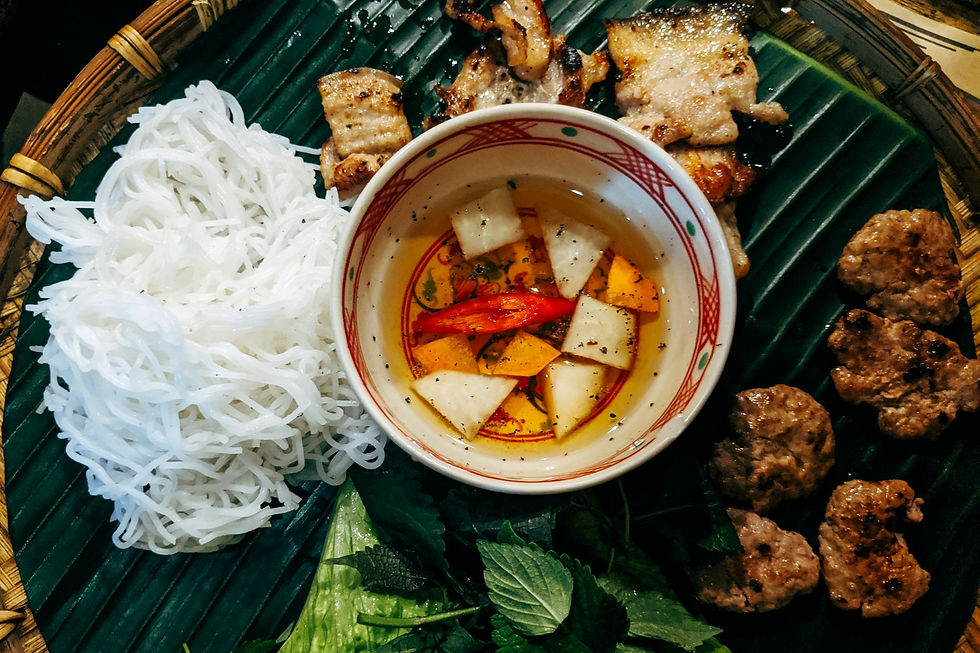
Evening. Cross to the south bank for dinner and a riverside stroll. Try banh khoai, Hue's crispy rice pancake, then finish with a glass of che, the sweet dessert soup sold all over town.
Day 2: The royal tombs
The Nguyen emperors built their tombs as landscaped retreats in the hills south of the city, roughly 7 to 12 km from the centre. Each has its own character, and two or three make a comfortable morning:
Tu Duc: the most romantic, with a lotus lake, pavilions and frangipani trees. The emperor used it as a retreat during his own lifetime.
Khai Dinh: small and dramatic, set on a hillside in an unusual blend of Vietnamese and European styles. The interior is covered in mosaics made from broken porcelain and glass. Expect a steep flight of steps.
Minh Mang: grand and symmetrical, laid out along a long axis of courtyards, gates and lakes. It's the furthest out, so go early if it's on your list.
The tombs are too spread out to walk between. Most people hire a car or taxi for the morning or join a half-day tour. Ride-hailing apps work for getting there, but finding a ride back from the further tombs can take a while.
Afternoon. Back in town, try Hue's small steamed cakes: banh beo (rice cakes topped with dried shrimp), banh nam and banh loc, usually ordered together as a set. Then choose between Dong Ba Market for snacks and everyday local life, or the Thanh Toan tile-roofed bridge, an old covered bridge in a village about 7 km east of the city that's at its best in the late afternoon.
Evening. For a last dinner, order com hen: rice with tiny river clams, fresh herbs and crunchy pork crackling, a humble local favourite.
Practical tips
Tickets: the Imperial City and each tomb charge separate entry, but combination tickets covering the citadel and several tombs are sold at the gates and save money if you plan to visit two or more.
When to go: the driest, most comfortable months are roughly February to April, and summer is very hot. The rainy season runs from about September to December. October and November bring the heaviest rain and a real risk of flooding, so check the forecast and keep plans flexible at that time of year.
Where to stay: the south bank around Le Loi Street puts you within walking distance of restaurants, the river and the bridges to the citadel.
Getting around town: the centre and the citadel are easy on foot, by cyclo or by bicycle. Save the car for the tombs and outlying sights.
Where to go next
Hue slots neatly into a trip through central Vietnam. Hoi An is around 3 hours south by road, and Da Nang's airport has plenty of onward flights. If you're heading that way, our guides to what to eat in Hoi An and getting from Da Nang Airport to Hoi An will help with the next leg. Travelling near the end of the year? See Vietnam in December for what the weather is doing in each region.


Comments